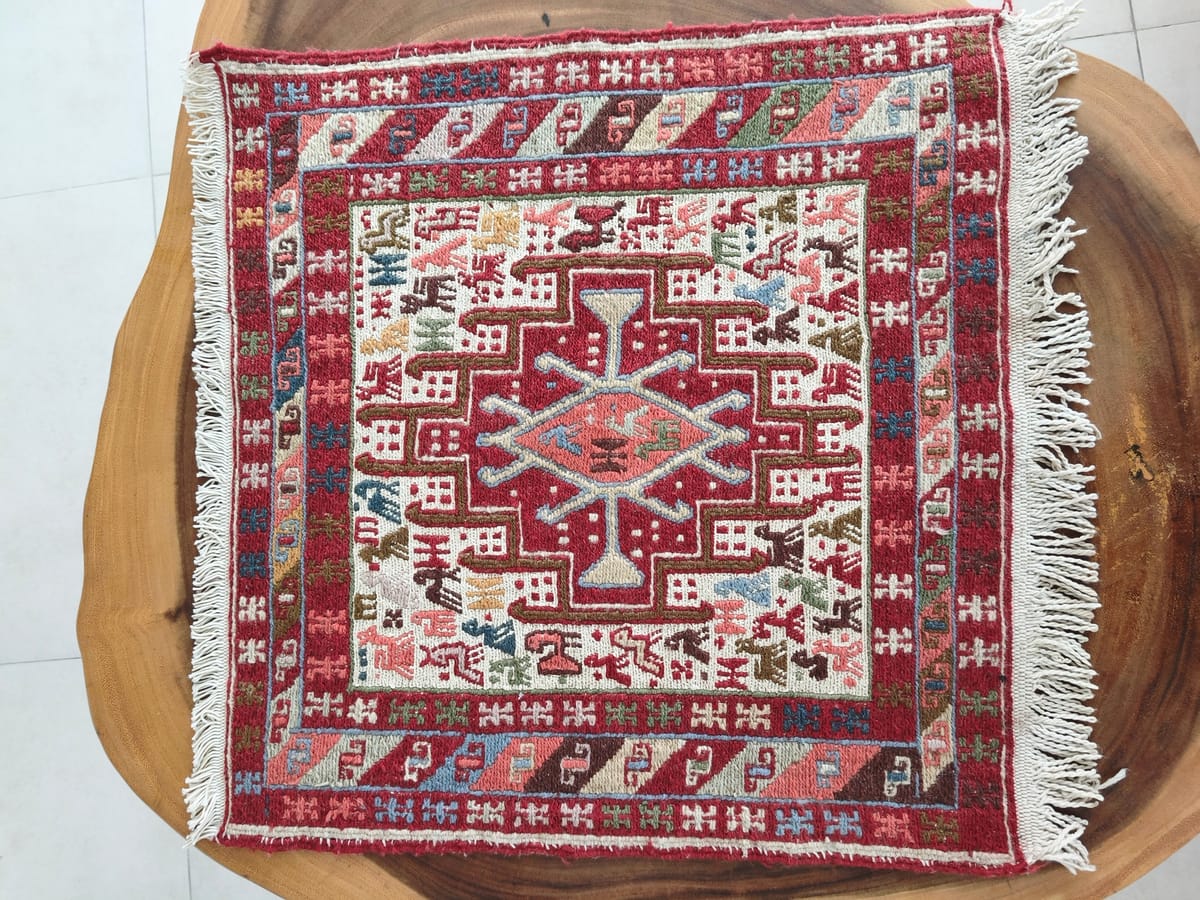
The first language I heard as a child was the language of my parents, Persian Azeri.
In the 2025 I decided to make learning languages and helping others learn languages my life path. As a life long poet I have always been captivated by the power of words and because of this I pursued an undergraduate degree in Communications. One of my favorite hobbies in my youth was freestyle rapping and writing lyrics. The skill I feel most proud of is being able to bring tears to friends and strangers by using poetry to show them their own stories from another voice.
I currently live in Bali, Indonesia and am studying Bahasa Indonesia as well as Bahasa Bali but for today's blog I want to talk about the language I heard growing up since I was first conscious. This language I will simply refer to as Azeri
There are approximately 15-20 million native speakers of Azeri in Iran and globally (again roughly) between 30 and 50 million. Pretty large number of speakers but unfortunately there is practically zero language learning materials for this language, despite it being the 2nd most spoken language in Iran. Persian (also known as Farsi) itself lacks a great deal of language learning resources despite it being a language of 70-90 million people in Iran and roughly 110-120+ million people world wide. Fortunately my friends over at Chai and Conversation have created wonderful resources for learning and practicing Persian.
At the end of last year I started one on one tutoring with a Persian language tutor from the website iTalki and began having my first lessons learning the Azeri language. My teacher, a local Iranian living in Tabriz, was wonderfully helpful in guiding me in my first lessons. It was in these first lessons that I had the most strange experience of my life, remembering a language I already know.
It has been studied that when we learn a language and many years pass where we don't use it, the language begins to recede back into our memory and conscious and unconscious mind, still accessible but seemingly dusty and filled with cob webs. If that is the case with languages we learned but haven't used, my theory is that would be the same for languages we have heard since birth but having practiced vocalizing and using as adults.
The experience of hearing my teacher say the words I already knew the meaning for and which I could hear both of my parents saying with clarity was joyful and ecstatic. Like I have a giant puzzle in my mind which I intuitively know how the pieces fit together in an effortless way.
Growing up when I met other Persian people I felt guilt and shame that I couldn't speak Persian fluently despite some early lessons as a child and attempted practice with family and friends. Now as an adult I have a deep compassion for that young person navigating the challenge of languages as Azeri and Persian are completely different languages, even though they have some overlap in vocabulary.
Currently there is an internet blackout in Iran so I am not able to continue lessons with my iTalki teacher living there but I am hopeful that the internet will return and I can continue lessons again. In the meanwhile I managed to find after countless hours of searching a definitive text of "Basic Course in Azerbaijani" by Fred W. Householder Jr. with Monsour Lotfi that is presented with the Tabrizi dialect of my parents. I feel intense gratitude that this book exists online. Now I have a tangible book as source material to help me study and practice.
Being 37 years old I have accumulated some skills over the years and namely software engineering as I spent ten years working at tech companies working at different capacities that instilled in me a deep understanding of how software can best be created, implemented and delivered. The last few years have been an exploration of my interests outside of typical employment which have led me here to language learning.
Another big moment of inspiration and motivation for me was when I discovered the Persian/Azeri movies directed by the critically acclaimed Jafar Panahi whose latest movie "It Was Just An Accident" was nominated for an Oscar this year. The movie was powerful and when the main character phoned his mother at the start and end he spoke in Azeri, while the rest of the movie was in Persian. I then watched his movies "Three Faces" and "No Bears" which took place in small villages in Iran where the locals spoke in Azeri. The importance of these movies to me is so critical, without them I would struggle to find real pronunciation recordings of how the language of my parents sounds without access to a native tongue speaker. These movies, powerful and masterpieces in their own right, are the source of my fountain of knowledge I will continue to drink from. I remind myself often that there are likely many others who like me wish to speak with their family in native tongue and I am uniquely fit to educate myself and help offer tools to others who wish to do the same.
In a world of ignorance, war and oppression we can continue to use education and language to build bridges towards the more peaceful and beautiful world of connection and understanding.
I am currently building 4 language learning apps (Indonesian, Balinese, Persian and Azeri) as these are the languages I have most interest in. I live in a local Balinese neighborhood and there is not a single language learning app for learning this language, nor is there any for Azeri of course. There are some for Persian and Indonesian however most tend to teach formal language that is not how people actually speak, nor is there any intermediate or advanced content for serious language learners.
In this blog I will continue to explore language learning, cultural wonders I discover in my studies and any updates on when the language learning apps become available. I hope you will follow along with me in my journey.
Comments